




OCP Global Summit 2026: Open Rack-Scale Innovation Is Unlocking the Next Generation of AI Infrastructure

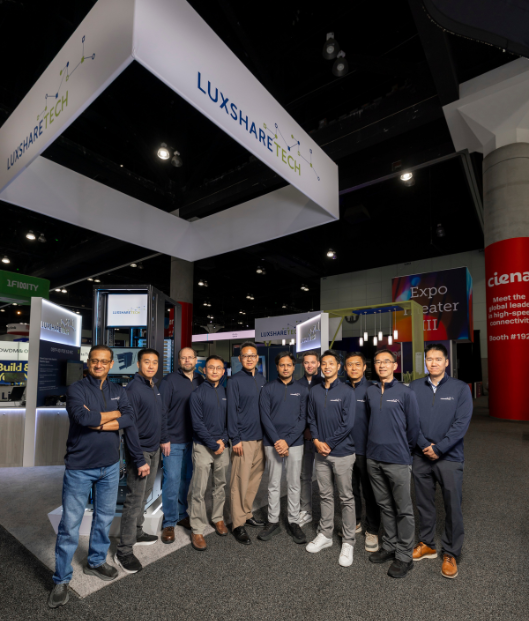
The 2026 Open Compute Project Global Summit in San Jose, CA made one reality unmistakable: the industry’s ability to scale artificial intelligence now depends on how effectively the ecosystem can co-design and industrialize the physical layers of the data center. From power conversion and distribution to high-speed interconnects and thermal management, the limiting factors have shifted from pure compute density to the integrated systems that deliver energy, bandwidth, and reliability at rack and facility scale. Over four days of keynotes, technical sessions, and live demonstrations, hyperscalers, silicon providers, and core component technology companies aligned around a clear direction, open standards and modular architectures that accelerate deployment of AI factories while reducing risk, footprint, and total cost of ownership.
Luxshare-Tech participated with a focused set of contributions that address precisely these constraints. We showcased live product demonstrations at our booth, unveiled the new Xuanyuan 3.0 AI rack architecture, verified new 448G copper interconnect platforms and liquid-cooled optical I/O solutions, and presented solid-state transformer technology for 800 VDC power delivery. These were complemented by four technical sessions that examined the underlying design and performance considerations to enable these technologies.
Together, the demonstrations and sessions illustrated practical pathways from the grid to the chip. The summit reinforced that progress at this layer of the stack is no longer optional. It is foundational to the industry’s ability to move from megawatt-class racks toward the multi-gigawatt facilities projected for the end of the decade.
Key Trends Defining the AI Factory
Several interlocking trends dominated the program. First, the scale of AI infrastructure has moved decisively beyond conventional data-center assumptions. Arm’s keynote cited projections of roughly 220 gigawatts of global data-center capacity demand by 2030 and an estimated $7 trillion in related spending, underscoring the pace of growth. Meta’s presentation challenged the long-standing premise that a cluster lives under a single roof, illustrating multi-building and multi-region training systems whose interconnect distances stretch hundreds of meters to kilometers. These realities place new demands on both electrical and optical reach, as well as on the power architectures that must feed them continuously.
Second, power delivery has become a first-order design constraint. Rack power is approaching and in some cases exceeding one megawatt, rendering traditional low-voltage AC distribution inefficient in both copper use and electrical-room footprint. Across the exhibition floor and in dedicated power tracks, 800 VDC architectures emerged as the dominant near-term response. Direct medium-voltage conversion further compresses the traditional chain of transformers, UPS systems, and multiple conversion stages into fewer, higher-efficiency platforms. NVIDIA’s keynote and related announcements highlighted contributions to open facility and grid-resilience specifications developed with other hyperscalers, while multiple system builders showcased 800 VDC power shelve, busways, and solid-state approaches aligned with OCP workstreams. The shared message was that AI scaling is now gated by how quickly power capacity can be manufactured, deployed, and operated reliably.
Third, thermal management has expanded from the compute tray into the interconnect domain. Optical modules operating at 224G and targeting 400G per lane dissipate increasing power, while port density continues to rise. Conventional air cooling is reaching practical limits inside dense front-panel designs. Liquid cooling, already established for GPUs and switches, is therefore being extended to high-speed I/O through cages, cold plates, and quick-disconnect fluid connectors. The result is a system-level co-design problem in which electrical, thermal, and mechanical domains must be optimized together.
Fourth, the interconnect roadmap is advancing toward 448G while copper remains relevant for a substantial portion of the channel. Industry efforts such as OIF CEI-448G and IEEE 400G per-lane workstreams are defining challenging signal-integrity targets. Twin-axial cabling continues to offer lower loss per meter than PCB for the bulk of the channel length, shifting the performance burden onto the connectors that transition between board, cable, and front-panel or backplane interfaces. Advanced co-packaged copper (CPC) and near-package approaches, combined with liquid-cooled optical modules and emerging form factors, are enabling the bandwidth density required inside AI racks. Open contributions such as NVIDIA’s third-generation MGX specification (supporting liquid-cooled, cableless compute trays, higher-density designs, and racks up to approximately 250 kW) illustrate how reference architectures can accelerate the broader supply chain.
Finally, openness itself is being treated as a velocity multiplier. Keynotes from NVIDIA, Arm, Broadcom, AMD, and OCP leadership emphasized that shared specifications, reference designs, and marketplace products allow multiple suppliers to design, manufacture, and deploy in parallel rather than waiting for single-vendor blueprints. Membership growth toward 700 organizations, rising contributions, and an expanding OCP Marketplace all reflect this dynamic. For operators, the practical benefit is faster time-to-power and greater choice in how racks are assembled and maintained.
Luxshare-Tech Perspective and Contributions
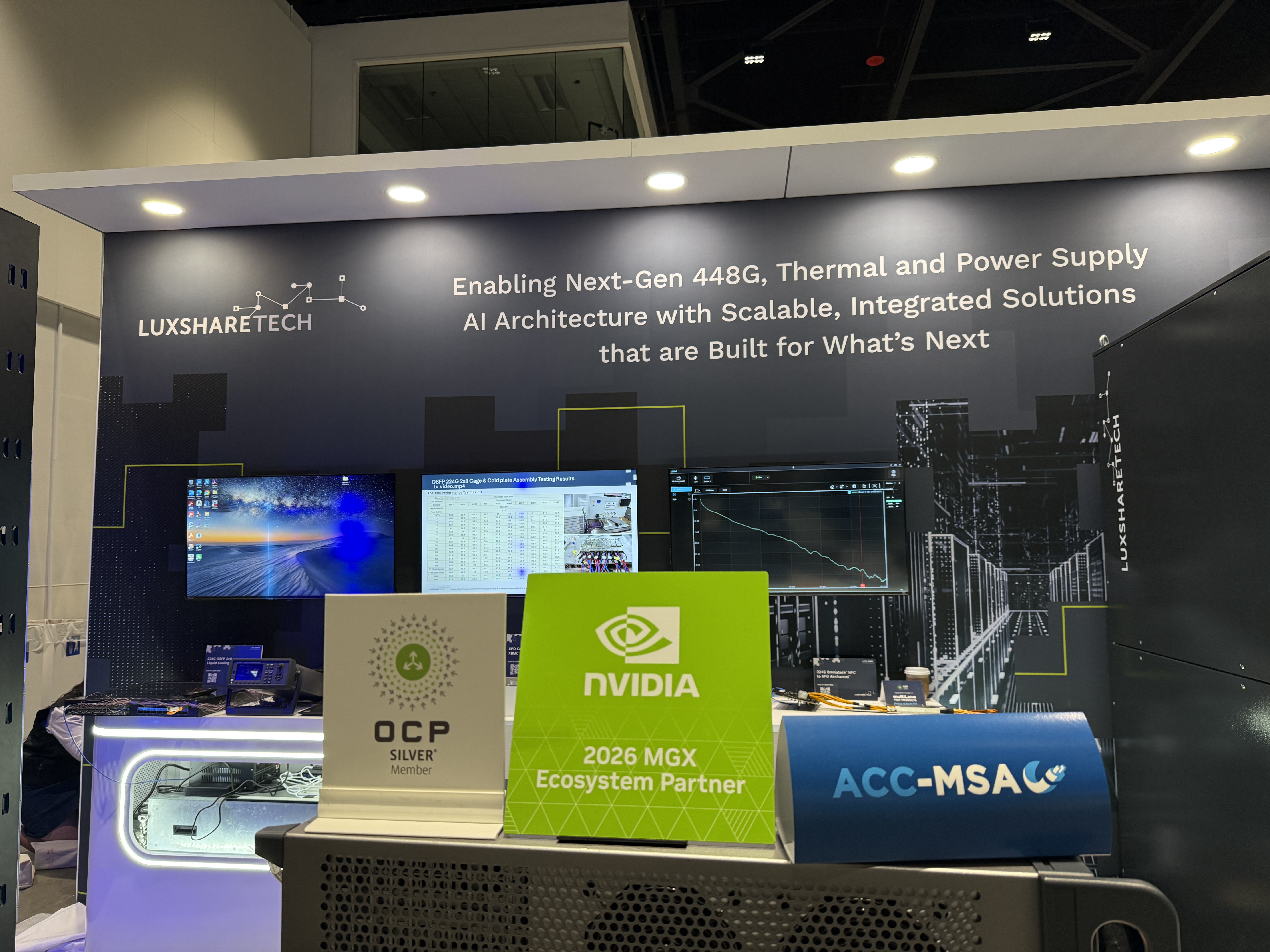
Luxshare-Tech’s presence at the summit centered on the technologies required to realize high-density, high-efficiency AI racks. At our booth, live demonstrations illustrated end-to-end approaches spanning interconnect, thermal management, and power.
The 448G KOOLIO™ CPC to OSFP I/O with Intrepid™ Nexus 448G Backplane Airchannel™ demonstration showcased innovative full link technologies to reflect real-world application scenarios. The system delivers over 90 GHz bandwidth, supports multiple 448G signal transmission modes, and demonstrates the ongoing viability of copper cabling for 448G applications through superior signal integrity and system-level performance.
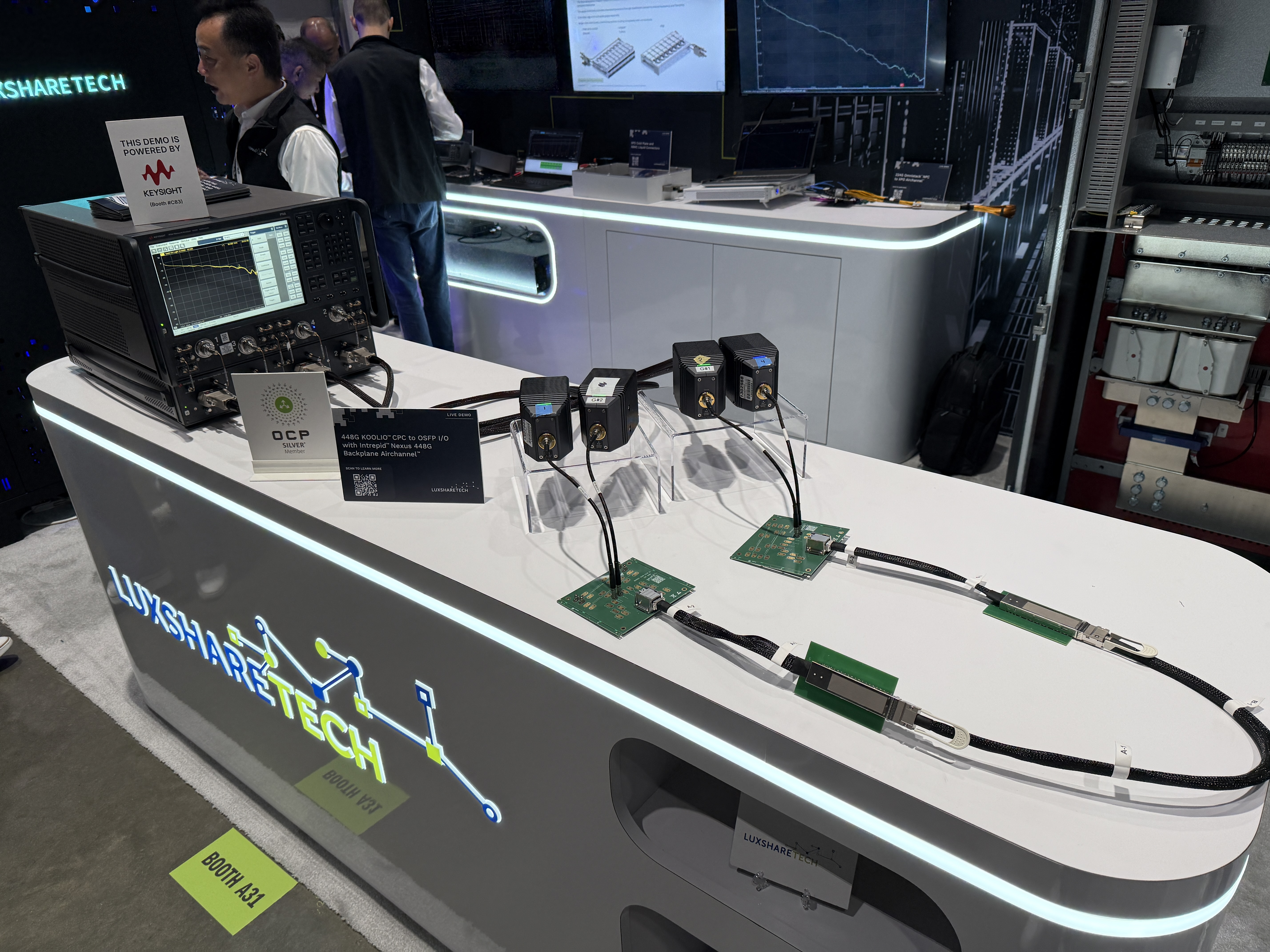
Live Demo: 448G KOOLIO™ CPC to OSFP I/O with Intrepid™ Nexus 448G Backplane Airchannel™
The 224G OmniStack™ NPC to XPO Airchannel™ live demo showcased a high-density I/O interface featuring 64 high-speed signal lanes that deliver 12.8T (200G per lane), with a clear roadmap to 25.6T at 400G per lane. The design incorporates an integrated liquid cold plate shared across paddle cards, supporting higher power consumption and high-voltage applications through blind-mate quick-disconnect connections. Key elements included the OmniStack™ NPC to XPO Airchannel™ Cable, OmniStack™ NPC SI test board, OmniStack™ NPC plug and receptacle, XPO receptacle connector direct attached with cable, and XPO passive loopback plug. Performance data demonstrated strong signal integrity across the channel.
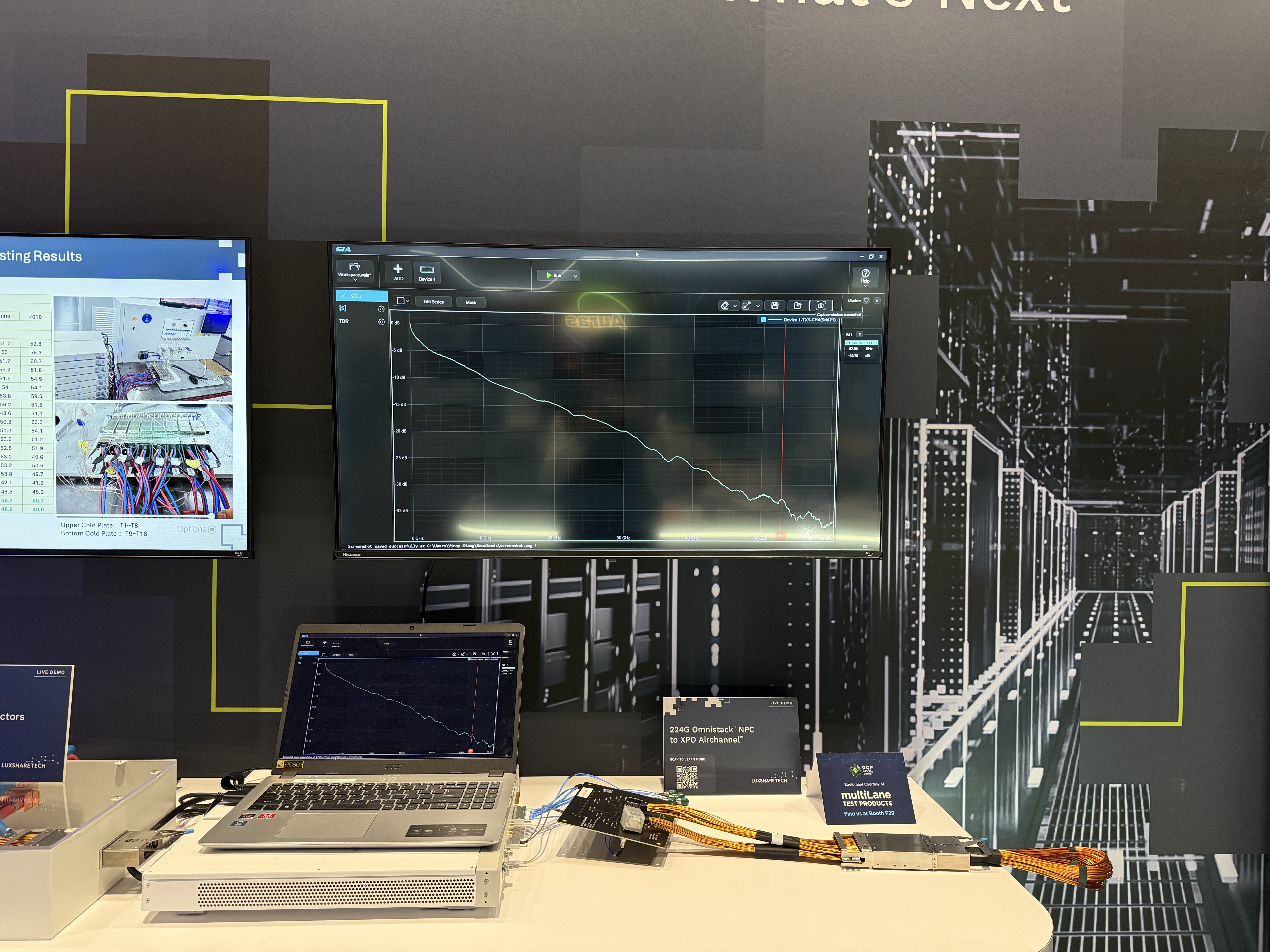
Live Demo: 224G OmniStack™ NPC to XPO Airchannel™
Complementary XPO Cold Plate and XBMC Liquid Connectors provided a liquid cooling solution for the eXtra-dense Pluggable Optics (XPO) module. XPO uses a 64-channel pluggable form factor delivering 12.8T per module; 8X the bandwidth of OSFP with 4X front-panel density. The blind mate quick disconnect (XBMC) features an inlet and outlet plug on each module that mates automatically with sockets on the host manifold; self-sealing valves close on both sides when disconnected. Two 32-channel paddle cards arranged belly-to-belly share a single internal skived-fin copper cold plate, supporting 200W–400W TDP and compatible with water, PG10, and PG25.
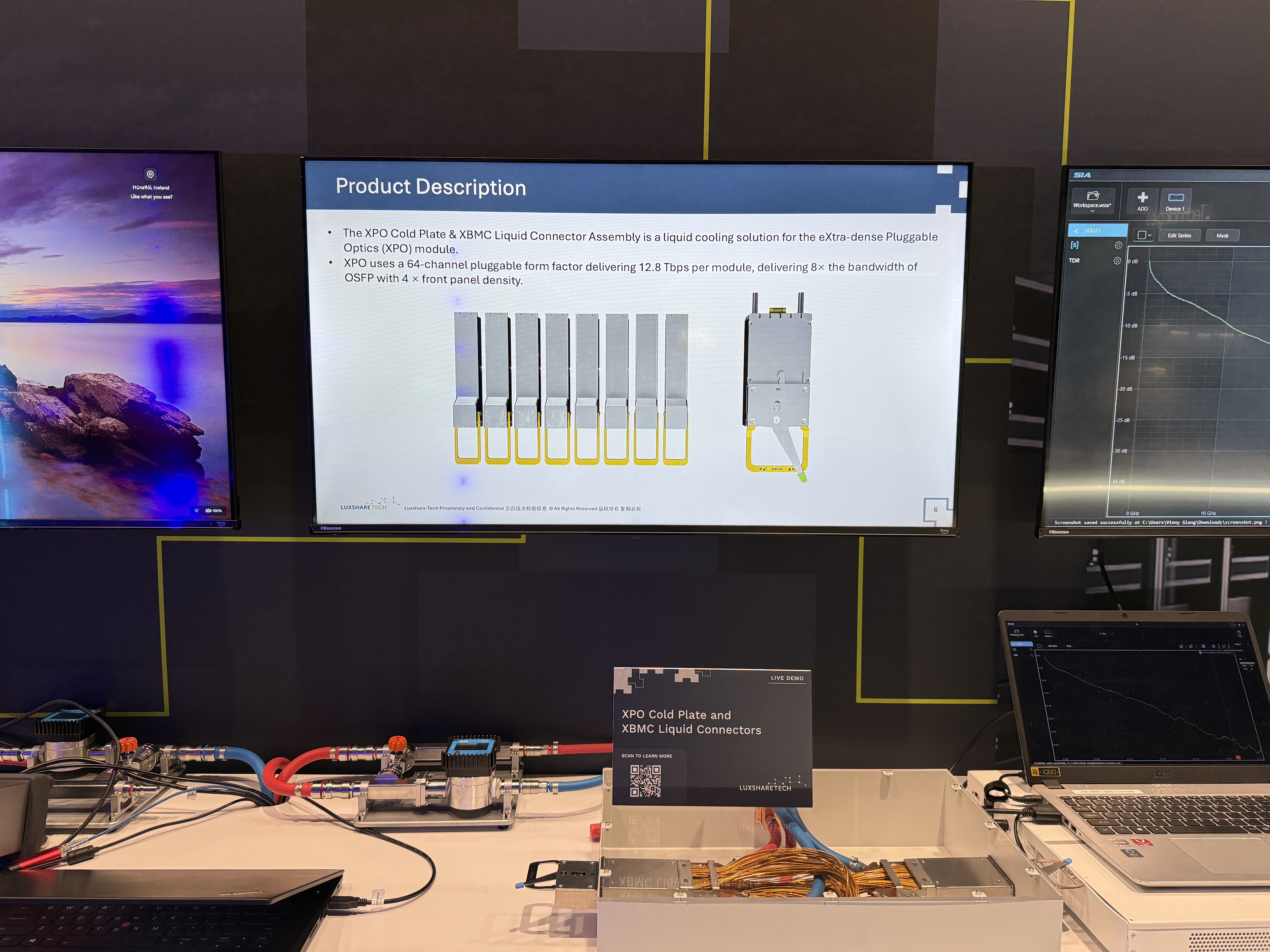
Live Demo: XPO Cold Plate and XBMC Liquid Connectors
The 224G OSFP Liquid Cooled I/O demonstration presented a 2x8 cage with cold plates as a complete solution for cooling 1.6T OSFP modules.
It featured fluid connectors (MQD03), manifolds and spring clip retainers, providing an independent floating cold plate structure with copper tubes for pressure resistance. The upper cold plate provides downward pressure through traditional clamps for buoyancy and flexibility, enabling one-step cage and cold plate press assembly and single-side inlet/outlet to minimize system routing complexity. Simulation and thermal test results confirmed effective heat removal under high-power conditions.
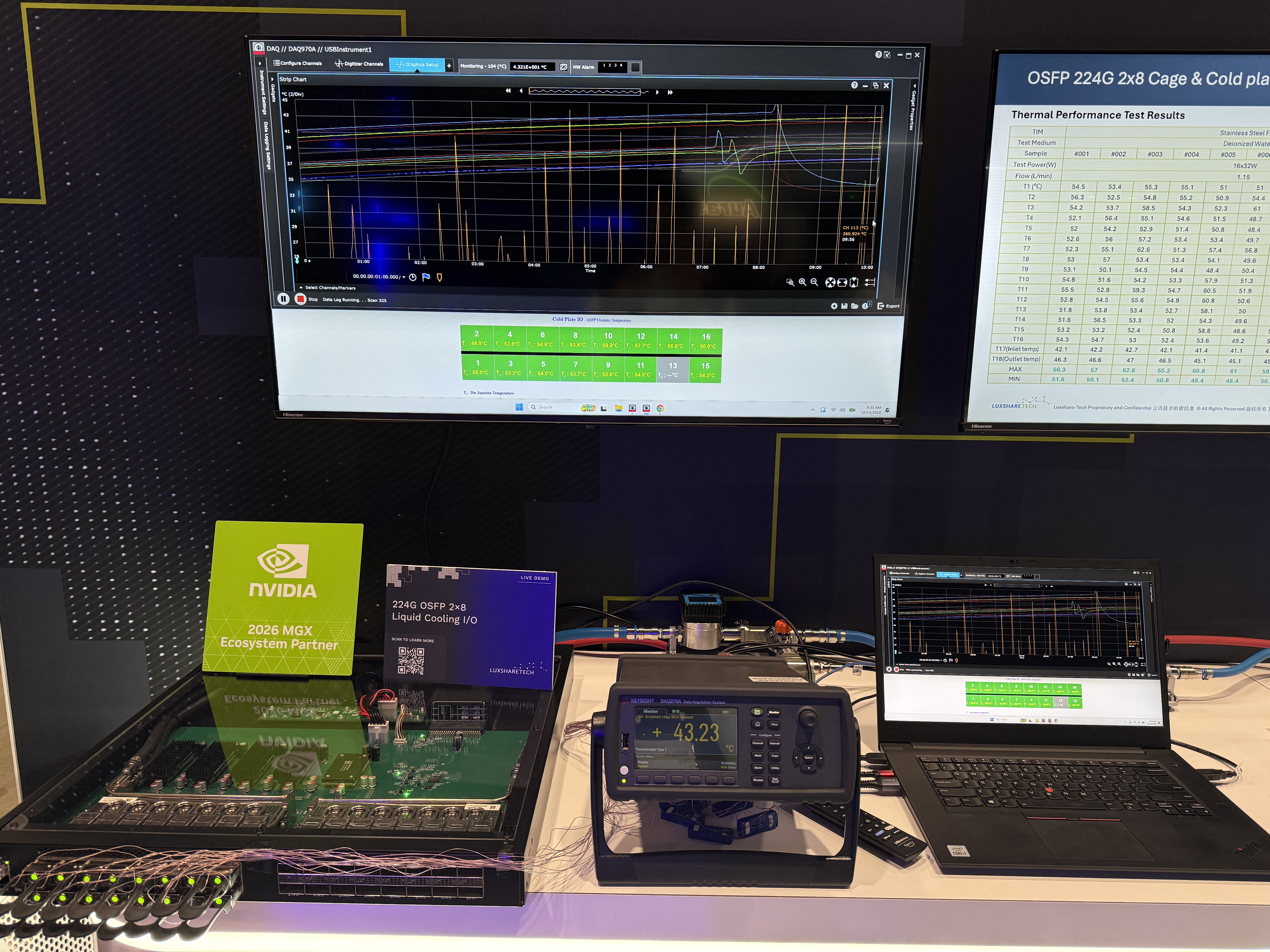
Live Demo: 224G OSFP 2×8 Liquid Cooling I/O
Our new Xuanyuan 3.0 AI rack brought these elements together. A comprehensive full-rack AI infrastructure solution featuring HVDC power supply, liquid cooling, NPC/CPC, and XPO/NPO technologies. Xuanyuan 3.0 integrates GPU nodes, switch nodes, CPU nodes, and front/rear cable box trays into a systematic platform that combines high-speed copper-optical interconnection, advanced heat dissipation, and efficient power delivery. Orthogonal cabling architecture resolves signal transmission distance and quality challenges while simplifying on-site maintenance and accelerating equipment recovery for large-scale GPU deployments supporting multiple independent high bandwidth domains.
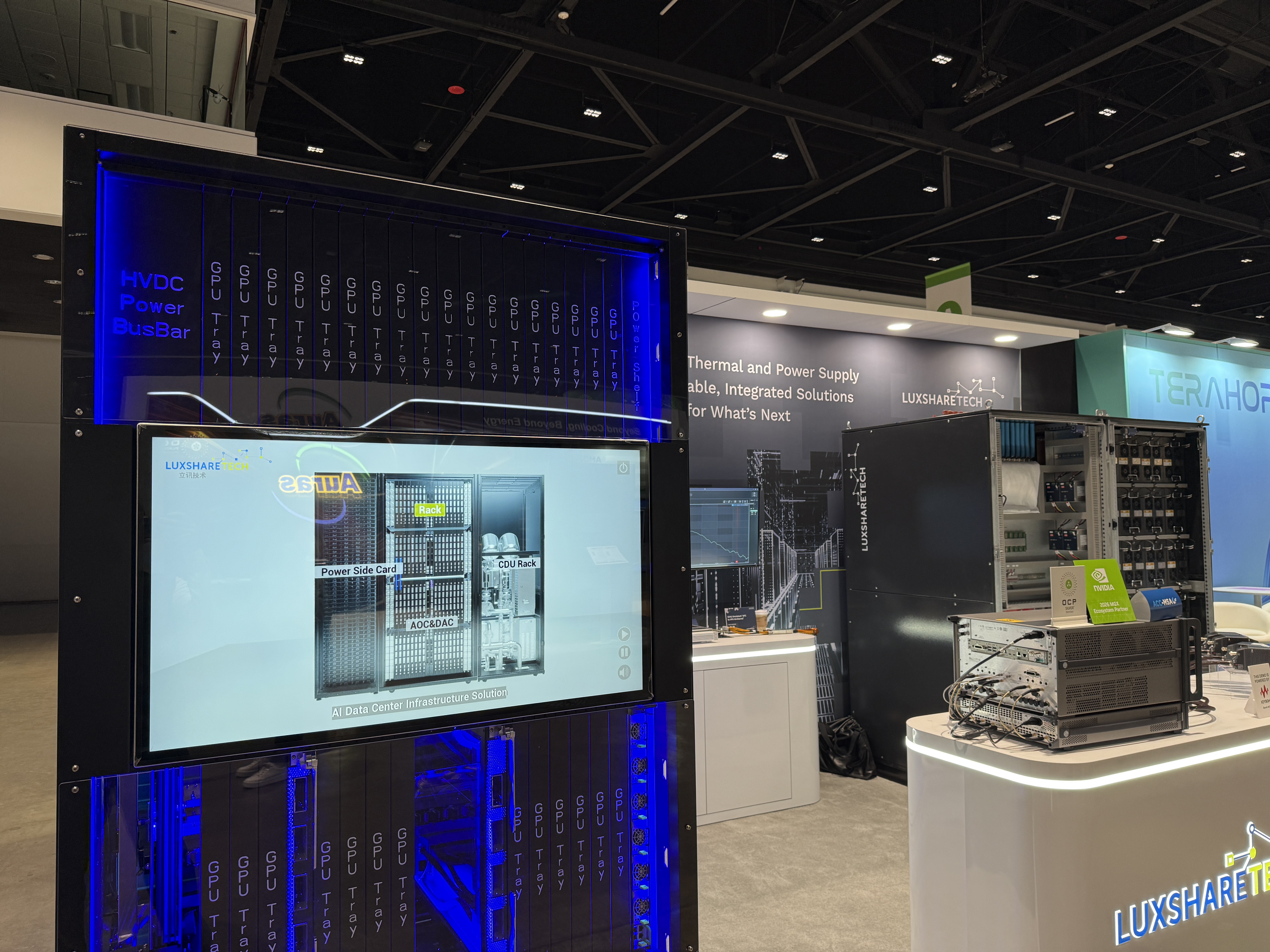
Xuanyuan 3.0 AI rack
On the power side, the Nova Link™ series of solid-state transformers, presented in collaboration with the Luxshare-Tech and Zinsight joint venture, directly addresses the grid-to-chip opportunity. A 35 kV / 10 MW liquid-cooled platform and a 13.8 kV / 3 MW air-cooled variant replace the conventional multi-stage chain (medium-voltage transformer, UPS, multiple AC/DC and DC/DC stages) with a single integrated conversion stage that delivers 800 VDC (or higher) at the rack. Relative to a traditional architecture, the approach improves system efficiency (approaching 99% peak), shrinks equipment footprint dramatically, and reduces typical delivery lead time from multi-year schedules to a matter of months. Technical sessions explored the co-design challenges of solid insulation and thermal paths, cell-level fault isolation, and multi-level reliability so that the higher power density does not compromise availability.
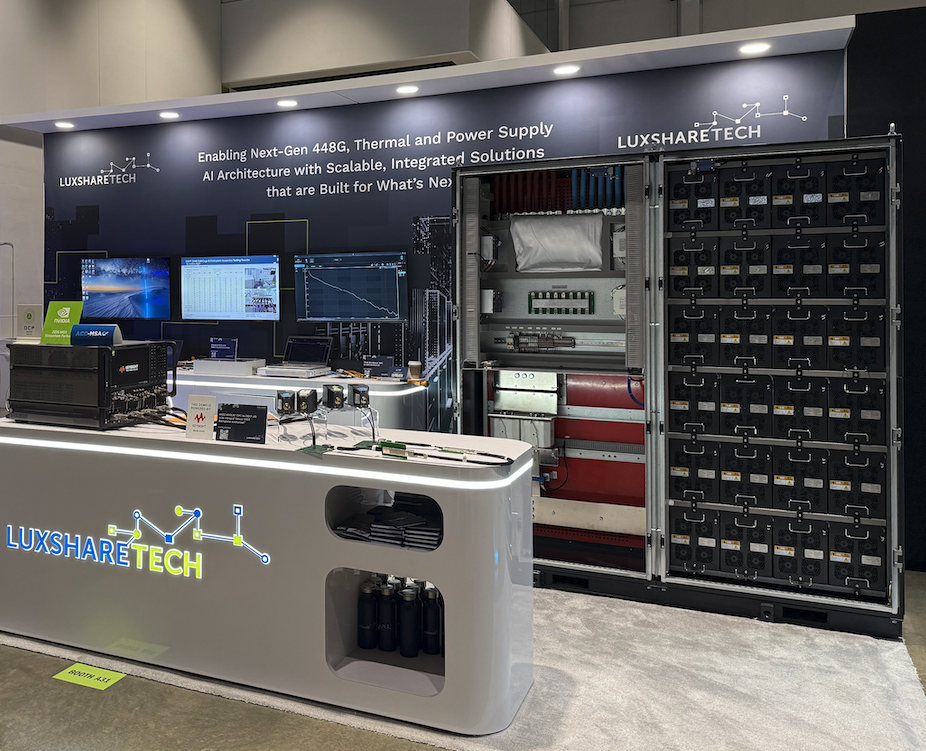
Nova Link™ Solid-State Transformers
Luxshare-Tech also participated in the NVIDIA MGX Ecosystem display, where several of its products were featured as part of the open MGX 1.2 reference architecture. These included the MGX 5000A Liquid-Cooled Busbar, the MGX ZQD Rack Manifold, ZQD (Zero Pressure Drop Quick Disconnect) fluid connectors, the Ultra Dense Interconnect Cable Cartridge, and the MGX 800 VDC Solid State Transformer Cell. This participation demonstrated how Luxshare-Tech’s interconnect, liquid-cooling, and power-conversion technologies integrate into the broader open MGX ecosystem to support higher-density, more manufacturable AI factory designs.
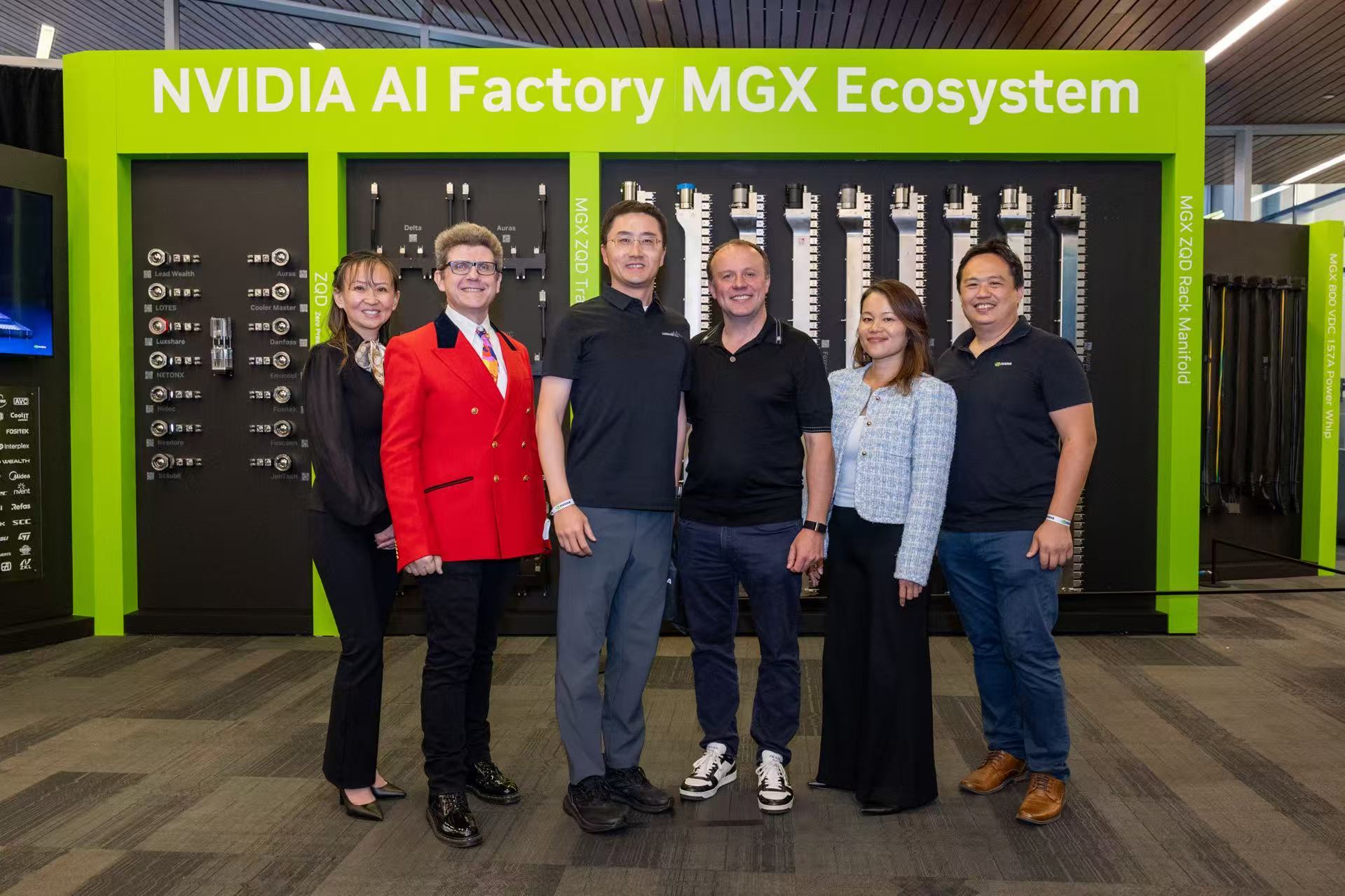
Robbie Xu, Head of US/EMEA Sales and Marketing at Luxshare-Tech, pictured with our NVIDIA partner at OCP Global Summit 2026
Luxshare-Tech was also proud to participate in four speaking sessions throughout the conference to provide deeper technical contributions to the OCP community. Andrew Kim, Director of Engineering, showcased copper interconnect innovations for realizing 400G electrical links, covering elastomeric CPC performance (stubless interface, high bandwidth beyond 110 GHz, dense differential-pair pitch, and strong crosstalk isolation) and backplane-adapted twinax mating structures. Robbie Xu, Head of Sales & Marketing, detailed the liquid-cooled OSFP 2×8 cage as an enabler for high-power optical ports in 1600G AI fabrics, emphasizing system-level co-design of thermal uniformity, sealing reliability, and rapid ramp-to-volume. Robbie also participated in a panel on 400G-per-lane optics module connectors with industry leading interconnect companies, which examined connector and cage requirements as module power and density continue to rise. Jingkui Shi, CEO of the joint venture between Luxshare-Tech and Zinsight, presented direct medium-voltage-to-800 VDC technologies, outlining insulation architecture, thermal co-design, and our industry leading solid-state transformers with a liquid-cooled power cell design that delivers 99% peak cell efficiency.
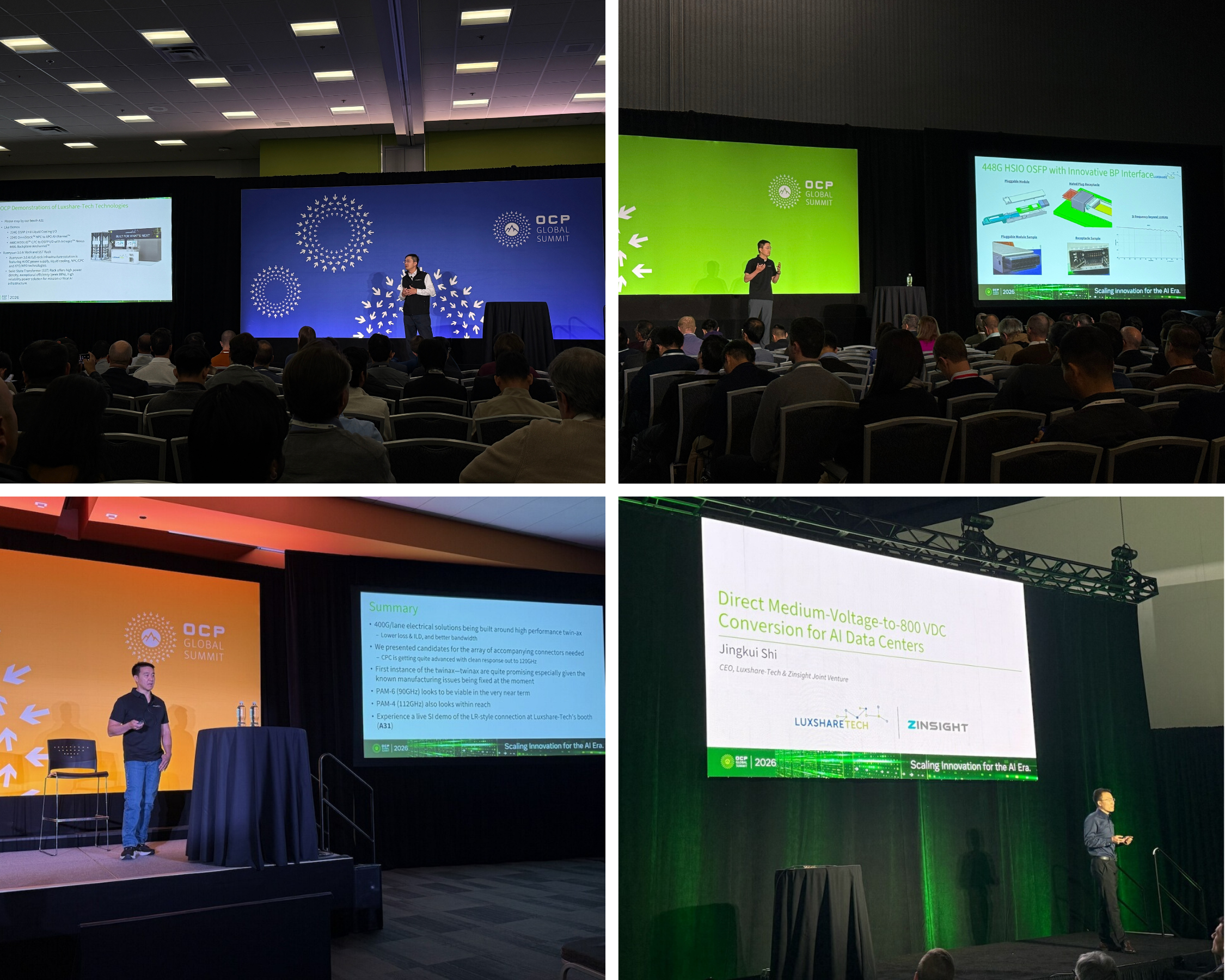
Luxshare-Tech’s speakers presenting at multiple speaking sessions at OCP Global Summit 2026
Links to Luxshare-Tech's Speaking Sessions:
Enabling High-Performance Thermal Management for 1600G AI Data Center Interconnects presented by Robbie Xu, Head of US/EMEA Sales and Marketing
Download the presentation <here>
400G/lane Optics Module Connectors presented by Robbie Xu, Head of US/EMEA Sales and Marketing
Download the presentation <here>
Copper Interconnect Innovations for Realizing 400G Electrical presented by Andrew Kim, Director of Engineering
Download the presentation <here>
Direct Medium-Voltage-to-800VDC Conversion for AI Data Centers presented by Luxshare-Tech Jingkui Shi (Luxshare‑Tech and Zinsight Technology – CEO)
Download the presentation <here>
Taken together, these contributions position Luxshare-Tech to support the industry’s transition to next-generation 448G interconnect solutions while simultaneously addressing the power and thermal realities of megawatt-class racks. The emphasis remains on open, modular building blocks, CPC and near-package interfaces, liquid-cooled optical cages, and grid-connected solid-state conversion, that leading core component technology companies can integrate into a variety of rack and facility designs.
Looking Ahead
The 2026 OCP Global Summit confirmed that the next phase of AI infrastructure will be defined as much by power, interconnect, and thermal co-design as by the accelerators themselves. Open specifications such as MGX 1.2, 800 VDC architectures, and evolving 448G channel definitions are creating common reference points that allow the ecosystem to move faster and with greater confidence. At the same time, the physical challenges of maintaining signal integrity at higher lane rates, removing heat from dense optical ports, converting medium-voltage power efficiently and reliably, and doing so in serviceable, manufacturable form factors, require continuous innovation from companies that operate at the intersection of electrical, mechanical, and thermal engineering.
Luxshare-Tech will continue to advance these capabilities through active participation in open standards, collaborative development with system builders and hyperscalers, and practical demonstrations of integrated rack-level solutions. As the open ecosystem continues to mature, these contributions are intended to give operators and system designers more options for building the next generation of AI data centers with greater speed, efficiency, and resilience.
-

 NewsOCP Global Summit 2026: Open Rack-Scale Innovation Is Unlocking the Next Generation of AI InfrastructureLearn More

-
 NewsLuxshare-Tech at OCP Global Summit 2026- Scaling Innovation for the AI EraLearn More
-
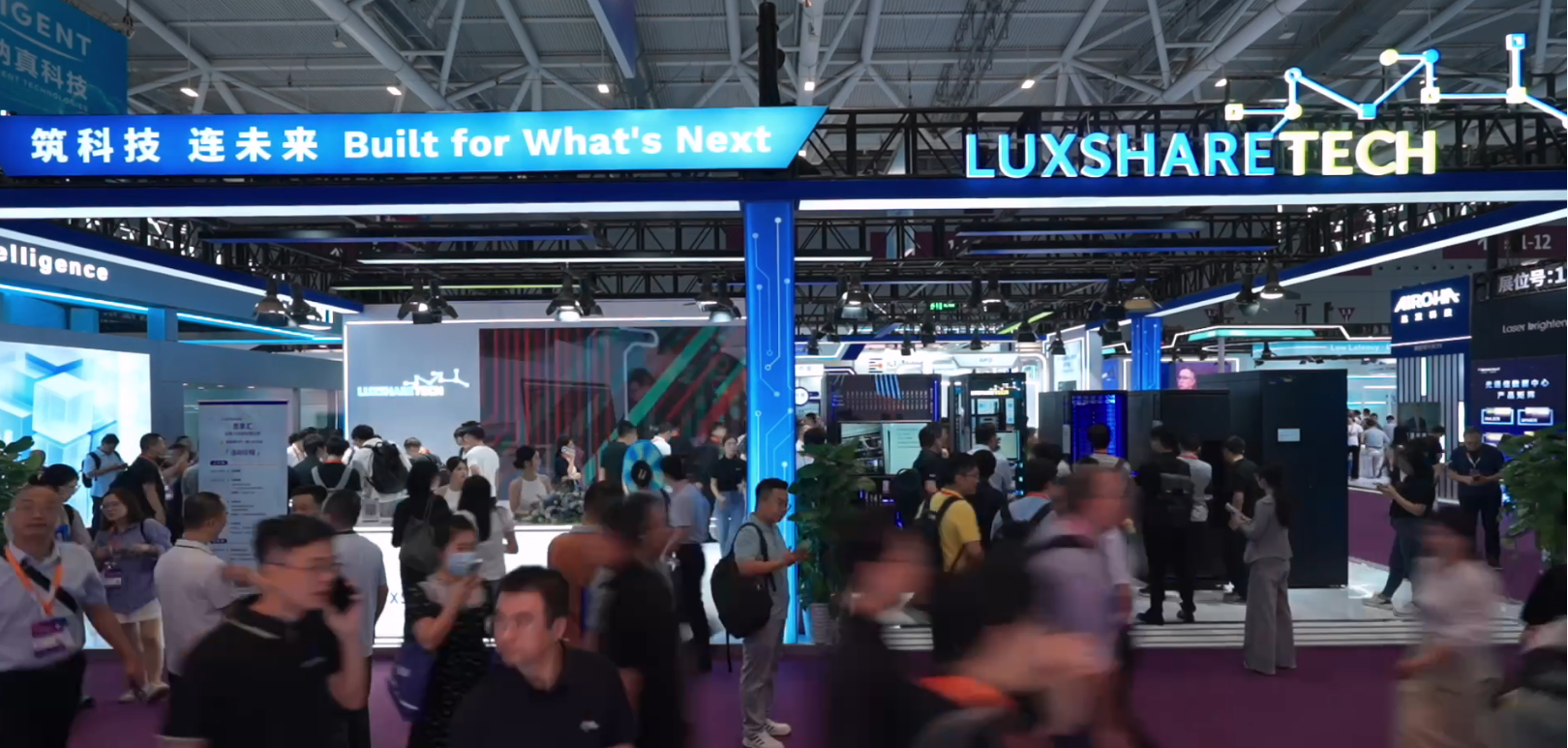 NewsCIOE 2026 Recap | Luxshare-Tech Deepens System-Level Component Synergy to Build a Solid Foundation for AI Computing Power in the Era of SupernodesLearn More
Contact Us
Ready to Get Started? We’re Here to Help.
Want to learn more about how we can work with you on your next project? Our global engineering and sales teams are here to answer questions, explore ideas, and help you find the right solution for your data center needs.


